Designing homes for elderly families is an important factor in creating a good quality of life for senior citizens in Thai society. With demographic changes leading to an increasing elderly population, designing homes that meet special needs and ensure safety is essential. This allows families to live together happily and securely. Choosing an appropriate home design helps reduce potential accidents and provides convenience in daily living.
Moreover, having a home designed to accommodate the needs of the elderly also helps strengthen family relationships by allocating shared living spaces. This enables family members to live closely together, whether engaging in activities within the home or caring for one another. Therefore, suitable home design not only addresses safety concerns but also creates a warm atmosphere that fosters stronger bonds among family members.
Key Points Summary
- Homes for the elderly should be designed to be convenient and safe to suit daily living needs.
- Choosing high-quality, non-hazardous materials helps enhance home safety.
- Proper space allocation, such as bathrooms and bedrooms, should allow easy access and sufficient room for movement.
- Shared use by family members requires functions designed for ease of use by everyone.
- Incorporating smart technology, such as security systems and home device controls, makes life more comfortable.
The Importance of Home Design for Elderly Families
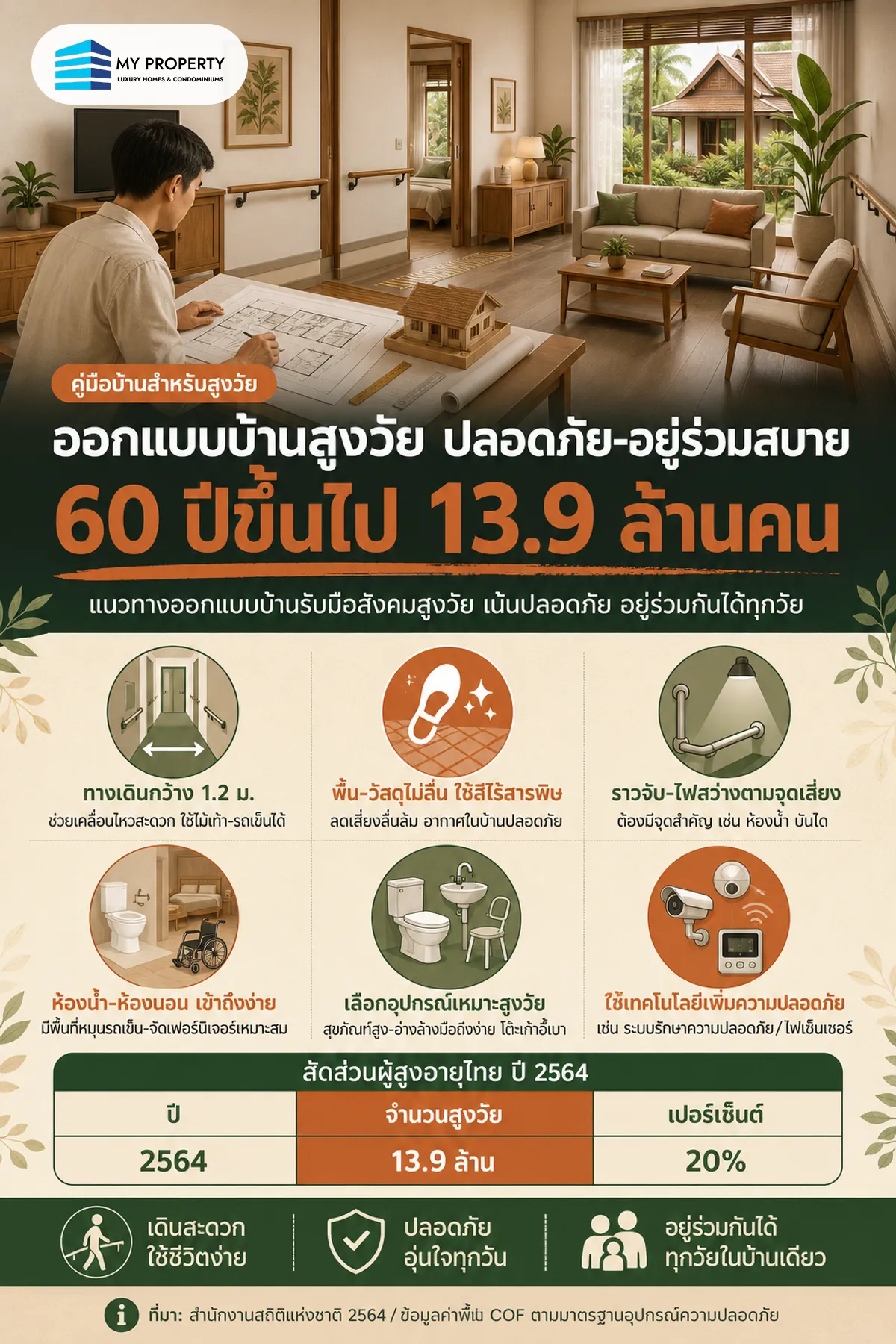
In Thai society, the number of elderly people is continuously increasing. According to data from the National Statistical Office in 2021, the population aged 60 and over in Thailand reached 13.9 million, accounting for about 20% of the total population. This number is expected to rise in the future. Therefore, designing homes for elderly families is extremely important to meet their special needs and ensure safety in their living environment.
Meeting Special Needs
Elderly individuals often have needs that differ from working-age groups, such as convenience in movement and access to various areas within the home. Designing homes with wide corridors and no stairs can help reduce the risk of slips and falls. Additionally, using safe and non-toxic materials, such as paint free from harmful chemicals, helps create a pleasant and safe atmosphere for the elderly.
Safety in Living
Home design for the elderly should prioritize safety, especially in high-risk areas such as bathrooms and staircases. Installing grab bars and non-slip flooring in bathrooms can reduce the chance of accidents by up to 70%. Moreover, installing appropriate lighting systems throughout the home helps elderly individuals move safely during nighttime.
Creating a Suitable Atmosphere
Designing homes with appropriately allocated living spaces also impacts the quality of life for the elderly. Having areas that can be shared with family members, such as living rooms or kitchens, not only fosters good family relationships but also helps elderly individuals feel less isolated and happier in their daily lives.
Designing homes for elderly families is therefore not just about creating a place to live but also about building a safe environment that supports a quality life.
Design Principles for Safe Homes for the Elderly
Designing homes for the elderly is extremely important, especially regarding safety. There are various methods to reduce the risk of accidents at home.
Avoiding the Use of Hazardous Materials
Choosing safe materials is crucial, such as using non-toxic paints and chemicals, which can be found in water-based paints or those certified by relevant authorities. Additionally, materials containing volatile substances should be avoided, as they may pose health risks, such as wood coated with harmful chemicals.
Designing Spacious Walkways
Designing the interior space with wide walkways is another important principle. Generally, walkways should be about 1.2 meters wide to allow elderly individuals to move comfortably and confidently. Moreover, using non-slip surfaces, such as textured tiles or natural wood, helps reduce the risk of slipping and falling.
Installing Handrails in Key Areas
Installing handrails in key areas, such as stairs and bathrooms, is essential. Handrails should be sturdy and installed at appropriate heights to allow the elderly to grip and support themselves easily. Durable materials that prevent slipping should be chosen.
Providing Appropriate Lighting
Lighting arrangement is another important factor in designing homes for the elderly. There should be sufficient lighting in all areas, including the installation of automatic sensor lights that turn on and off with movement to prevent accidents in the dark.
Designing homes with a focus on safety for the elderly not only improves their quality of life but also brings happiness and confidence to their families regarding safety.
Choosing the Right Materials for Senior Homes
Selecting materials for senior homes is very important because the chosen materials affect the safety and comfort of elderly users, especially in frequently used areas such as walkways, bathrooms, and other living spaces.
Non-Slip Materials
Choosing non-slip surfaces is one of the best ways to prevent slip-and-fall accidents, which can cause serious injuries. Laminate wood flooring or ceramic tiles with special coatings can be good options. For example, ceramic tiles with a Coefficient of Friction (COF) starting at 0.6 or higher ensure good grip while walking.
Lightweight Materials
Lightweight materials, such as light wood or composite materials, can help seniors manage moving or rearranging interior decorations more easily. Additionally, lightweight materials reduce the risk of injury from lifting or pushing heavy objects. Furniture that is light and easy to move, such as desks or chairs weighing no more than 5-10 kilograms, will make daily use more convenient and comfortable.
Choosing Environmentally Friendly Materials
Choosing safe and environmentally friendly materials is also important, especially materials free of toxins, such as paints and adhesives without VOCs (Volatile Organic Compounds). This helps keep the indoor atmosphere clean and safe for seniors. Moreover, materials with long durability and easy maintenance, such as tiles that are easy to clean and require minimal upkeep, should be selected.
Choosing the right materials for senior homes not only enhances safety but also makes daily life more comfortable and improves the quality of life for the elderly.
Proper Interior Space Arrangement for the Home
Arranging the interior space of a home for the elderly is an important aspect that should not be overlooked. It requires consideration of comfort and safety in every room, especially the bedroom, bathroom, and living area.
Bedroom
For the bedroom, it is recommended to design a spacious area to allow the elderly to move around comfortably. There should be at least 1.2 meters of space between the bed and other furniture to facilitate the use of a cane or wheelchair with ease. Additionally, choosing a bed with an appropriate height—not too low or too high—will help the elderly get in and out of bed more easily.
Bathroom
Bathroom design must prioritize safety. Grab bars should be installed near the sink and in the bathtub to help the elderly stand or enter and exit confidently. It is advisable to select non-slip flooring, such as ceramic tiles with a rough texture, and to install convenient fixtures like a higher toilet seat and a bathtub with a low edge for easy access.
Living Area
The living area should be arranged to allow easy movement. Suitable furniture should be chosen, such as sofas with adequate height and comfortable cushioning, as well as tables at a proper height to prevent the elderly from bending over too much. Additionally, using rugs with smooth edges can help prevent tripping.
Arranging the interior space of a home to suit the elderly not only enhances daily comfort but also reduces the risk of accidents. Therefore, investing in these small details will undoubtedly improve the quality of life for the elderly members of your family.
Bathroom Design for Comfort
Designing bathrooms for the elderly is very important because bathrooms are high-risk areas for accidents such as slips and falls. Therefore, the design should focus on safety and ease of use.
Installing Grab Bars
Installing grab bars is one way to enhance safety in the bathroom. Grab bars should be installed in appropriate locations, such as beside the toilet and in the bathtub, to provide support for the elderly when standing or moving. For example, grab bars in the bathtub should be about 80-90 centimeters above the floor for easy reach.
Non-Slip Surfaces
Choosing the right surface in the bathroom is also a key factor in preventing accidents. The floor should use non-slip materials, such as tiles with anti-slip properties, which are widely available on the market. Tiles with a textured surface should be selected to increase grip.
Appropriate Fixtures
Choosing bathroom fixtures should also consider comfort, such as toilets with extra height (approximately 45-50 centimeters) to make it easier for the elderly to sit or stand. Additionally, other accessories like sinks should be at an appropriate height for easy access and have enough space to accommodate wheelchairs if necessary.
Designing Spacious Areas
The bathroom should be designed with enough space for movement, especially if the elderly use wheelchairs or walking aids. There should be at least 1.5 meters of turning space to ensure smooth usage.
Designing a safe and user-friendly bathroom not only helps reduce the risk of accidents but also provides peace of mind for elderly family members and makes bathroom maintenance easier.
Creating Shared Living Spaces for Families
Designing shared living spaces in homes for elderly families is extremely important as it promotes joint activities and family relationships, especially in areas such as the kitchen and living room, which are the central points of daily life.
Designing a Suitable Kitchen
The kitchen should be designed with ample space to allow elderly individuals to move around comfortably. Equipment should be arranged appropriately, such as installing counters at a suitable height, approximately 85-90 centimeters, to ensure ease of use. Additionally, non-slip materials should be chosen, such as ceramic tiles with a textured surface, to prevent potential accidents.
Designing the Living Room
The living room should have furniture arranged to avoid hazards, such as sofas with an appropriate height and wide seating to make it easy for elderly individuals to sit down and stand up. Furthermore, there should be open space around the furniture to prevent tripping and facilitate easier movement within the room.
Creating Shared Spaces Within the Home
When designing shared living spaces, consideration should be given to activities that foster family relationships, such as allocating space for joint cooking activities in the kitchen or preparing a dining table that can accommodate about 6-8 family members, allowing for comfortable shared activities.
Creating shared living spaces in homes for elderly families not only helps family members live comfortably but also promotes love and warmth within the family.
Smart Home Technology for the Elderly
Integrating smart technology into homes for elderly families not only enhances convenience but also improves safety for seniors. Various intelligent systems can simplify daily living, including monitoring and controlling the home remotely.
Security Systems
Modern security systems, such as internet-connected CCTV cameras (IP Cameras) and smartphone alert systems, are essential considerations when designing homes for the elderly. For example, CCTV cameras with motion detection and alerts for unusual activity can help family members continuously monitor the safety of their elderly loved ones.
Home Device Control
Using technology to control home devices via smartphones or tablets makes it easier for seniors to manage various appliances, such as controlling household lighting, turning air conditioners on or off, or adjusting the home audio system. One example is a Smart Home system, which allows users to customize settings according to their needs, such as scheduling bedroom lights to turn on to prevent trips or falls during the night.
Health Care Technology
Beyond safety, health care technology is another valuable option. Installing devices that monitor heart rate or blood pressure, which can connect to smartphones, enables seniors to track their health and easily share data with their doctors.
Designing homes with smart technology is a worthwhile investment. It not only improves the quality of life for the elderly but also effectively reduces family members’ concerns about the safety and health of their elderly relatives at home.
Examples of Homes Designed for Seniors
1. Housing Project "Healthy Senior Living"
This project is located in Nonthaburi district. The houses are designed with spacious areas and smooth, step-free walkways, making them convenient for seniors who use wheelchairs or have mobility issues. Prices start at around 4.5 million baht. Grab bars are installed in bathrooms and along walkways for safety.
2. Condominium "Saint Moritz"
Located in the Sukhumvit area, this condominium is designed to support senior living with wide elevators and modern security systems. Unit prices start at approximately 3.2 million baht. Bathrooms are designed with ample space and equipped with suitable features such as shower seats and grab bars.
3. Detached House "Baan Thaweesuk"
Situated in Pathum Thani province, this project is designed to meet the needs of seniors. It includes landscaped gardens and seating areas ideal for relaxation. House prices start at about 5.9 million baht. Smart electrical systems are installed, allowing control via mobile devices for convenience.
4. Residential Project "Villa Grand"
This project is located in Bang Na district and features single-story homes to prevent accidents from stair use. Prices start at around 6.5 million baht. There are outdoor living spaces suitable for family activities, along with efficient security systems installed.
5. Condominium "Parkland"
Located in the Ladprao area, this project focuses on senior-friendly design. It offers shared common areas such as lounges and fitness rooms equipped with appropriate exercise equipment. Unit prices start at approximately 2.8 million baht.
Choosing a home or condominium designed for seniors helps make daily living more comfortable and safer. If you are looking for a suitable residence for an elderly family, you can contact the MY Property team for more information and personalized advice.
Summary
Designing a home for elderly families not only enhances safety and comfort but also creates a suitable atmosphere for all family members, especially seniors who require special care. This involves choosing safe materials, organizing spaces efficiently, and using technology to improve convenience in daily life.
If you are looking for design options for senior-friendly homes, the MY Property team is happy to provide consultation and recommend projects that meet your needs. Contact us today for more information!
Frequently Asked Questions (FAQ)
How should a home for the elderly be designed for safety?
A home for the elderly should be designed with a focus on safety. It should have wide walkways without obstacles. Using non-slip materials and installing lighting in various areas can help reduce the risk of accidents.
What materials are suitable for an elderly-friendly home?
Materials suitable for an elderly-friendly home should be non-slip, such as laminate wood flooring or tiles with anti-slip properties. Additionally, lightweight materials should be chosen for ease of movement.
What should be considered when organizing the interior space of the home?
When organizing the interior space, convenience of use should be considered. For example, the bedroom should be close to the bathroom, and walkways should be wide and safe for the elderly to move around easily.
What technologies help make life more convenient for the elderly?
Technologies that help make life more convenient for the elderly include security systems with CCTV cameras and motion sensors, as well as home device control via smartphones.
What are some examples of homes designed for the elderly?
Examples of homes designed for the elderly include single-house projects with wide walkways and green spaces, or condominiums equipped with elevators and comprehensive facilities for ease of use.
What functions should a bathroom designed for the elderly have?
A bathroom designed for the elderly should have features that facilitate ease of use, such as grab bars for standing and moving easily, faucets that are easy to turn on and off, and non-slip mats on the bathroom floor.