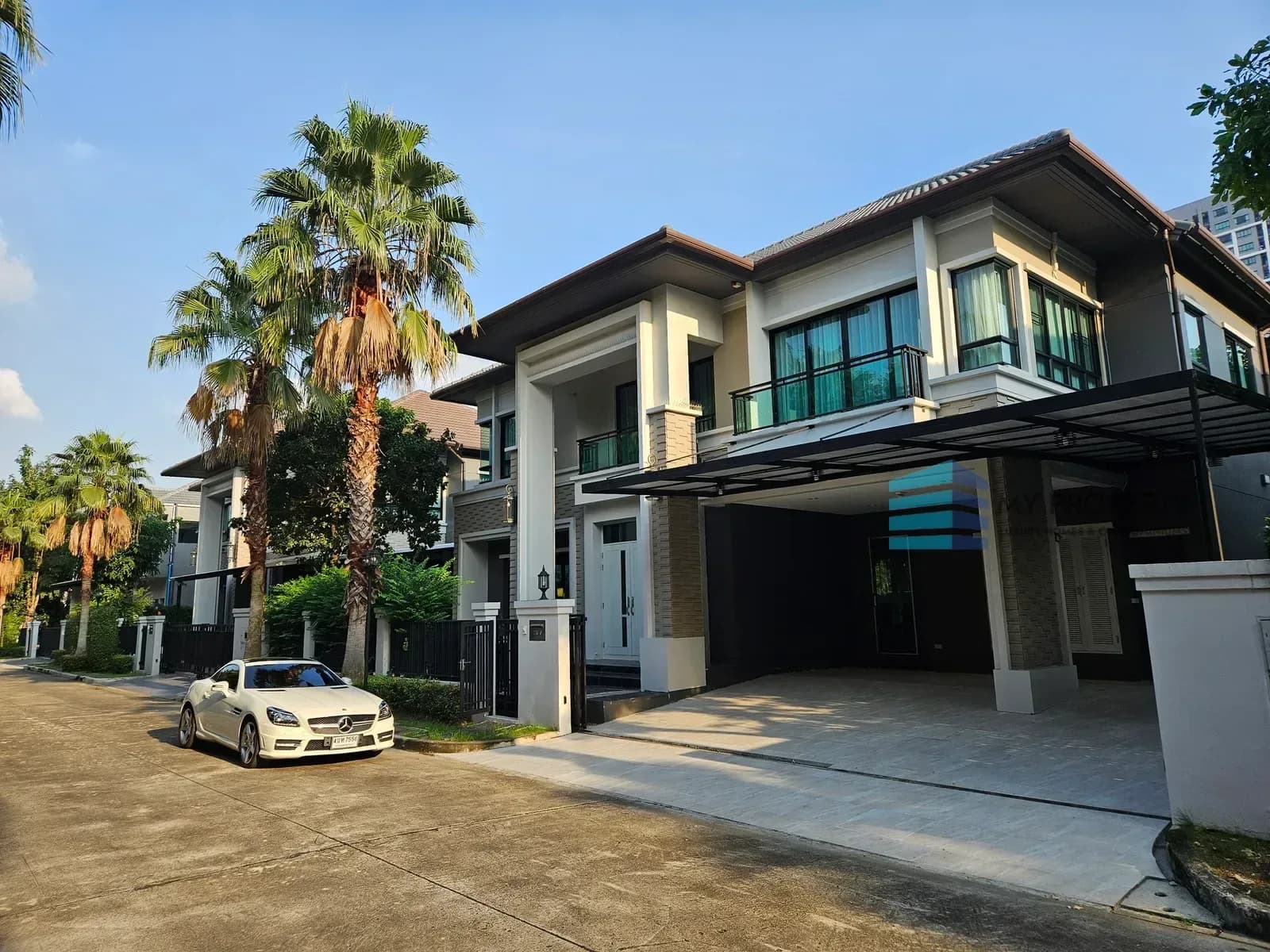
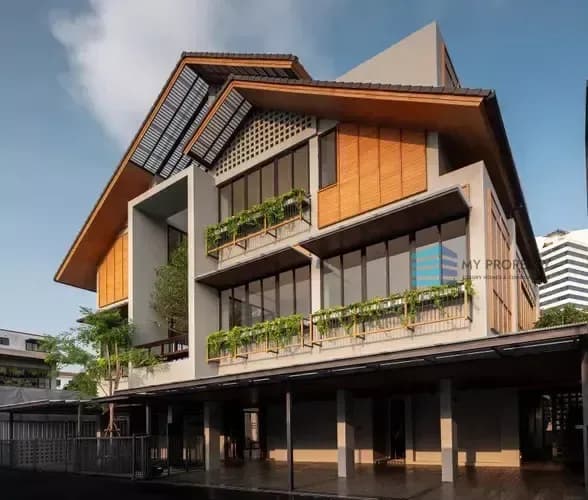
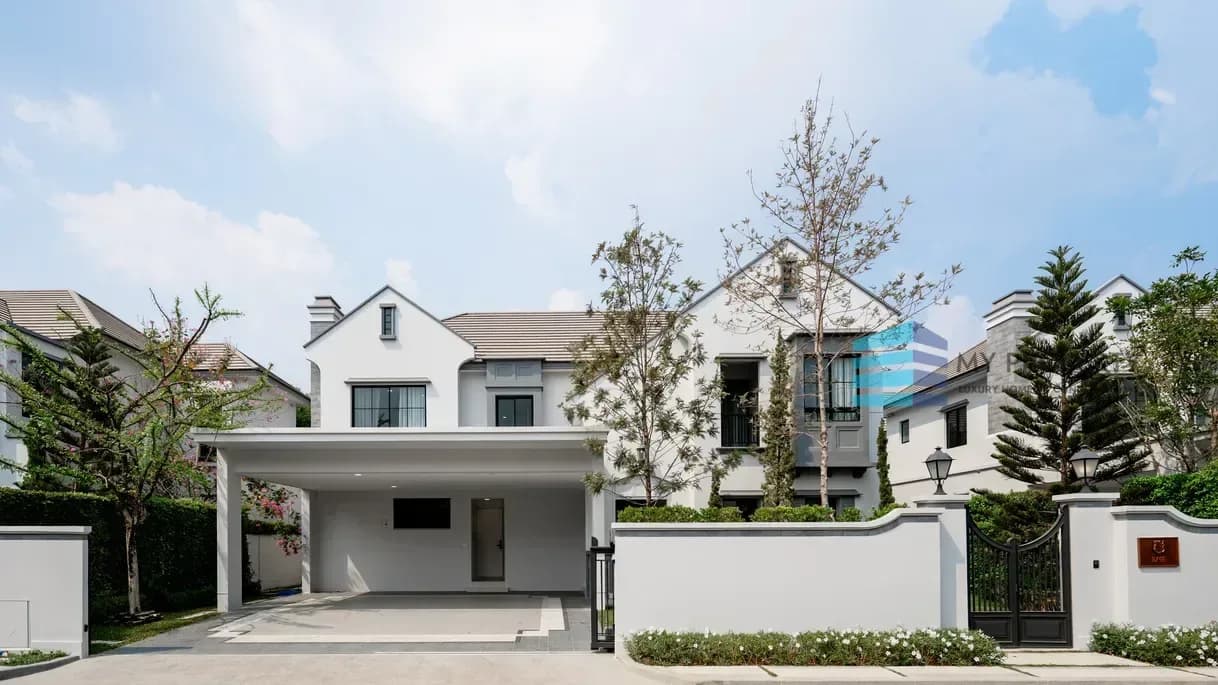
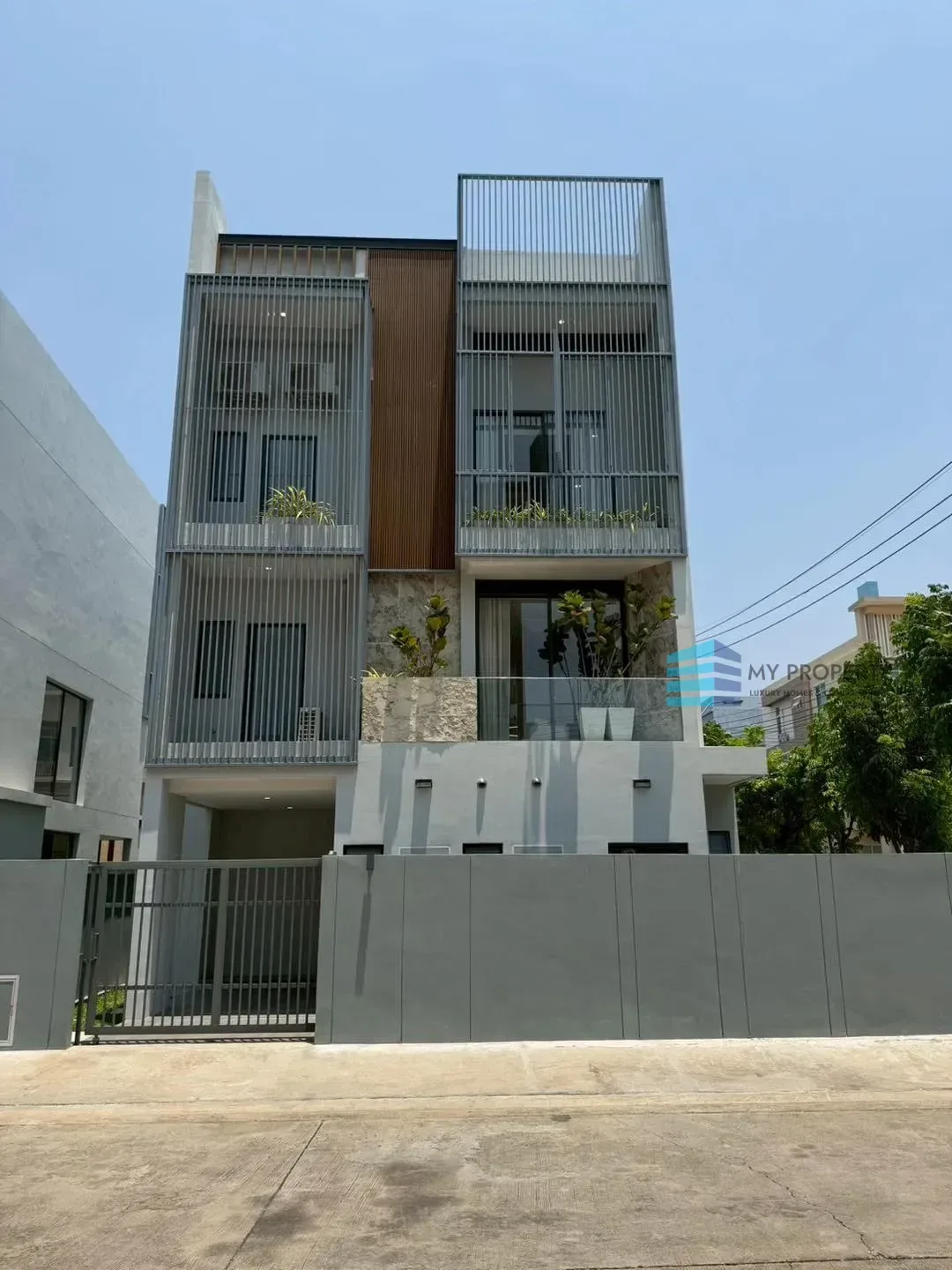
Thai homes battle strong sun almost year-round. Many owners respond with air-conditioning in every room and high bills. But air-con is the last tool; a well-designed house heats up less in the first place, so the air-con works less, rooms cool faster, and mornings and evenings are comfortable without it. Whether you're building, choosing an estate home or upgrading an existing house, the same principles apply.
Heat enters through three main paths. The largest is the roof, in direct sun all day; scorching tiles radiate heat into the attic and down through the ceiling. Second, sunlit walls and windows, especially the west, which takes the hottest afternoon sun and keeps releasing heat into the evening. Third, hot air leaking through gaps, plus internal heat from appliances and cooking. Knowing this order lets you invest where it counts first.
Roof heat can be cut in three layers. The surface: light-coloured roofs reflect more sun than dark ones. Attic ventilation: soffit vents to admit cooler air and ridge or gable vents to release hot air stop heat building up under the roof. Insulation, which comes in several forms:
| Insulation | Location | Strength | Note |
|---|---|---|---|
| Reflective foil | Under purlins or tiles | Reflects radiant heat; inexpensive | Needs an air gap in front; loses effect when dusty |
| Glass wool / rock wool | Laid on the ceiling | Good resistance; thicker is better | Install continuously without gaps; use protective gear |
| Spray foam | Under roof sheets | Seals leaks and insulates | Costly; later roof-leak diagnosis is harder |
For existing homes, adding thick glass-wool insulation above the ceiling is one of the fastest-payback upgrades — quick to install, with immediate effect on upper-floor temperatures.
Thailand sits where the sun tracks mostly to the south for much of the year, and afternoon sun from the west is hottest. Generally, face the long sides north and south and the short sides east and west. Put spaces that don't need much cooling — stairs, storage, bathrooms, carports — on the west as a heat buffer, and bedrooms to the north or east, cooler in the evening. In estates where you can choose a plot, a north- or south-facing frontage usually gives a cooler home than a west-facing one.
Deep eaves keep sun off windows and walls and stop driving rain, which is why traditional Thai houses have such generous eaves. Modern box-style homes without eaves take full sun through their windows. For large west- or south-facing windows, consider shading fins, battens or awnings, and heat-reducing glass or quality window film that cuts heat while admitting light.
Traditional red-brick walls store heat and release it at night, so rooms with afternoon-sun walls stay warm until late. Lightweight aerated concrete blocks insulate better and store less heat, which is why modern estates use them widely. For heavily sunlit west walls, double walls with an air gap or added insulation work well, and light or heat-reflective exterior paint lowers surface temperatures.
Large trees to the west and south are the best and most beautiful sunshades, also cooling surroundings through transpiration. Choose species whose roots won't damage foundations and plant them a sensible distance from the house. When it isn't extremely hot, opening windows for cross-breezes flushes out stored heat; homes with windows on opposite sides of rooms or vents at the stairwell have a real advantage.
Ask about the type and thickness of roof insulation, wall material, glass type and plot orientation. If insulation is absent or thin, budget to add it.
Common causes: gaps in the insulation, an unventilated attic, or more heat entering through west walls and windows than through the roof. Check every path.
Usually, because they absorb heat from the roof deck. Ask the juristic person about roof insulation, and note that west-facing units heat up in the afternoon.
A cool home starts by keeping heat out, not pumping it out with air-con. Begin with the roof, then orientation, eaves, windows, walls and tree shade. These investments make a home more comfortable and lower bills for years. Browse well-designed houses at MyProperty listings.
Was this article helpful?
Hand-picked listings related to this article
 Lifestyle
More Thais live alone than ever — young professionals, the never-married, divorced and widowed. Choosing the right size and type of home, safety and emergency planning, buying on a single income, running costs, community and the small design choices that make a one-person home comfortable.
 Lifestyle
As the cool season approaches, fine-dust levels in Bangkok and the North typically rise. How to keep indoor air cleaner: choosing and sizing purifiers, sealing a house or condo, ventilating without letting dust in, air-con filters, indoor pollution sources, checking air quality, and what plants can and can't do.
 Lifestyle
Charging an EV overnight at home is the cheapest and most convenient option — if the house is ready. Portable versus wall chargers, checking meter and main capacity, dedicated circuits and the right residual-current protection, applying for a time-of-use meter, and calculating whether it saves money for your household.