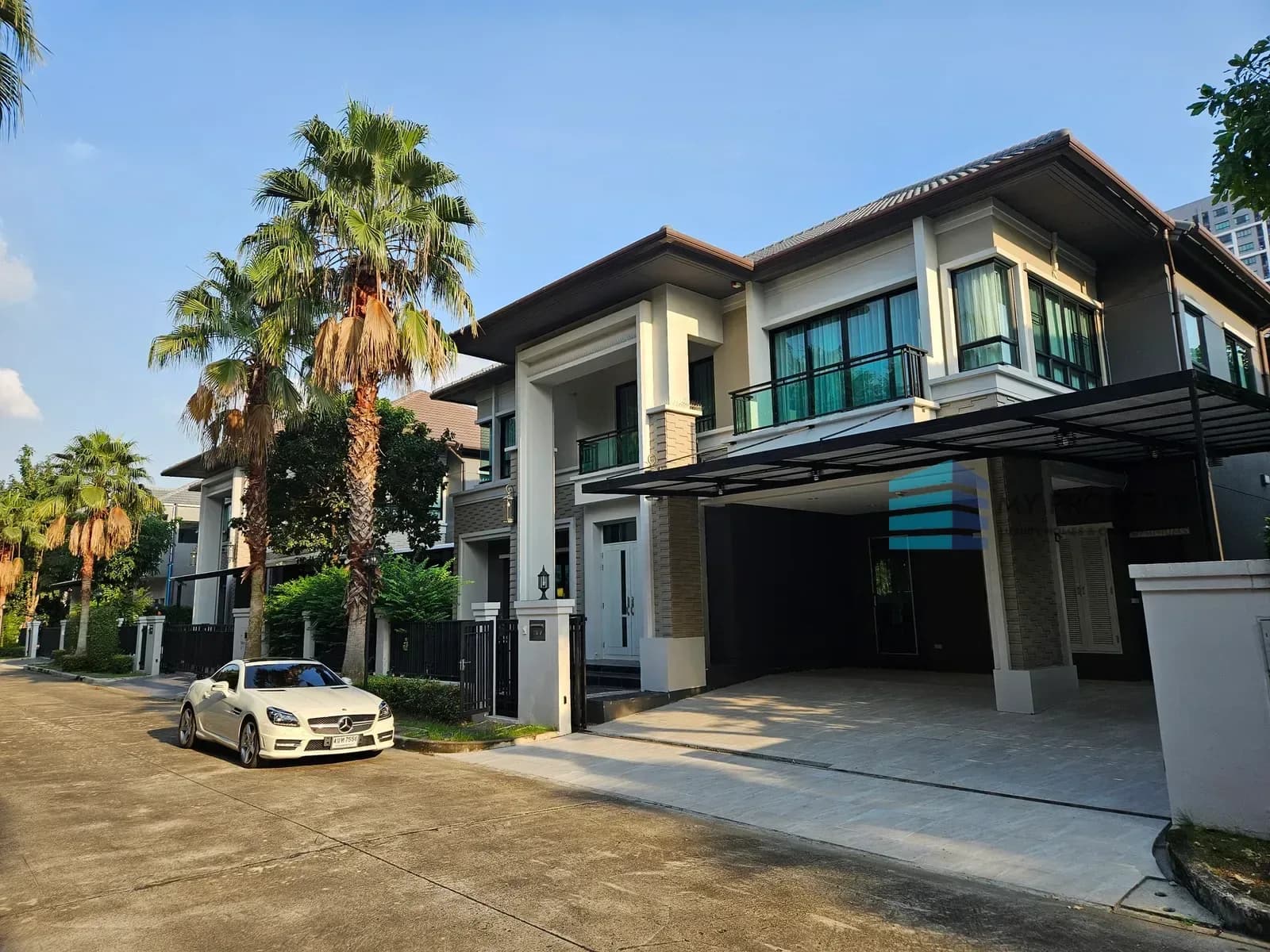

A stubborn belief among freelancers and traders holds that no payslip means no mortgage. It stops many from ever applying — or worse, pushes them into all-cash purchases when that capital had better uses. The truth: banks lend to the self-employed routinely; the income-proof rules simply differ from salaried life, and most applicants lose before starting because they never assembled evidence in a bank-readable form. This is the 12-month preparation guide written from the assessor's side of the desk.
Credit systems don't evaluate how talented you are; they evaluate how predictable your cash flow is. Salaried applicants win by default because one payslip a month answers that question in a single document. The self-employed must answer it with a larger file — and one thing must be understood up front: most banks do not count freelance income at face value. They apply an uncertainty haircut, so an average 100,000 THB a month of deposits may enter the calculation as only 60–80,000 depending on occupation and evidence quality. Your goal is therefore not "enough income" but visibly more than enough, with the haircut priced in.
The debt-service ratio works identically for everyone: total repayments should stay within 40–50% of counted income. A freelancer carrying car payments and maxed installment plans gets hit twice — income haircut first, then existing obligations eating the ceiling. Clearing small installment debts six months before applying is one of the fastest ways to grow the loan you qualify for.
Pillar one: bank statements. The document banks trust most, because it is hard to fake. Practice: open one dedicated income account and route every earning into it by transfer; stop taking cash, or bank it immediately with a noted source. Keep inflows steady month after month — banks respond to frequency and stability far more than to one spectacular month — and maintain a resilient month-end balance. An account that empties to zero every cycle reads as fragile; one whose balance compounds slowly reads as strength. Six months is the minimum banks review; twelve is where the file gains real weight.
Pillar two: taxes. Filing PND 90/91 with payment receipts is the most powerful income proof a freelancer owns — income you certified to the state yourself. Many freelancers minimise tax and regret it at application time, when their paper income reads zero. Reframe it: tax paid is the purchase price of income evidence that unlocks millions in credit — a return few investments match. With runway, file honestly for one or two years before the planned application, and collect the withholding certificates (50 tawi) from every client; they connect the deposits in your statement to their sources, closing the loop the assessor needs.
Pillar three: work continuity. Long or repeated client contracts, a verifiable portfolio and sales channels, commercial registration for traders, or professional licences. These answer the approver's final question: will this income still exist in year five of the loan? A registered business with a visible storefront — even a clearly established online one — always scores better than unexplained floating income.
| Option | Why it helps the self-employed |
|---|---|
| State housing banks (e.g., GHB) | Housing-lending mandate, more flexible self-employed criteria, periodic targeted programmes |
| The bank where your main account lives | They already watch your real behaviour — a good history at home outweighs paper elsewhere |
| Applying with a salaried co-borrower | Blends payslip stability with your income; raises both approval odds and loan size (with full legal liability for the partner) |
| Bigger down payment / smaller loan | Lower LTV means lower bank risk — 25–30% down visibly changes the assessor's posture |
On timing: apply when your trailing 12 months look their best, not right after a lean stretch, and never scatter simultaneous applications — dense bureau inquiries read as distress. Pick two or three institutions matched to your profile and apply deliberately with the complete file first time; completeness also avoids the document-request loop that delays approval and can cost you the promotional rate.
Not yet — the history is too short for the system to trust its consistency. Spend the time completing the three pillars across a full 12 months; approval odds and loan size will differ enormously. If you need housing meanwhile, a year of renting is an investment in the file, not wasted time.
Yes, when each stream carries its own evidence: payslips for the salaried part, withholding certificates and statements for freelance, shop statements for trade. The cleaner the separation of accounts and documents per source, the more the bank counts. Everything mixed inexplicably into one account is what sinks otherwise good files.
Extract the precise reason — insufficient income, DSR, bureau blemish, weak documents — fix that specific gap for 6–12 months, then reapply. Immediately re-applying elsewhere unchanged usually reproduces the result while adding inquiry marks that haunt the third attempt.
Self-employed mortgages pass on an unsecret formula: one steady account for 12 months, honest tax filings with every withholding certificate kept, evidence of work continuity, small debts cleared half a year ahead, and an arena chosen to fit your profile. One year of discipline in exchange for a credit door that stays open for the rest of your working life. Start today — and keep motivation up by browsing target homes at MyProperty listings.
Was this article helpful?
Hand-picked listings related to this article
 Tips & Guides
One title deed, four sibling names — Thailand's most common inheritance situation and its quietest time bomb. How co-ownership really works, the subdivision process step by step, and the three exits when someone wants out.
 Tips & Guides
A red line on a government map can cut through your land years before any bulldozer arrives. How Thai expropriation actually proceeds, what compensation covers, the appeal windows that matter, and the pre-purchase checks.
 Tips & Guides
The blue book confuses even lifelong homeowners: the 'house master' isn't necessarily the owner, an empty book is fine, and having your name in it for a year can save you 3.3% tax when selling. The full guide.